Products
MIST ELIMINATOR WITH WT COVER
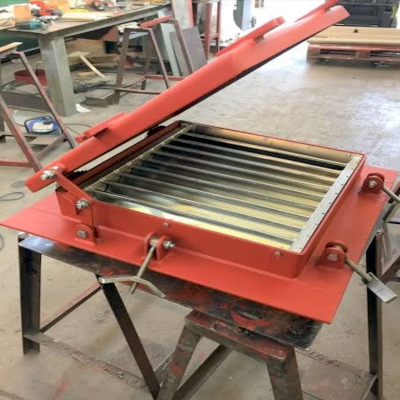
1. Three-Break Design:
Suitable for marine HVAC applications as it:
• Effectively separates water/mist from air.
• Handles moderate to high velocities (2 – 4.5 m/s air velocity).
2. Pitch of 30 mm:
Common in marine designs. Offers a balance between pressure drop and separation efficiency.
3. Vane Height 100 mm:
This is a typical depth for compact installations. It offers:
• Good droplet inertia for separation
4. Drainage Direction:
• Ensure the lowest point of the break angles allows water to drain downward
DECK HEAD GOOSE NECK WITH COVER
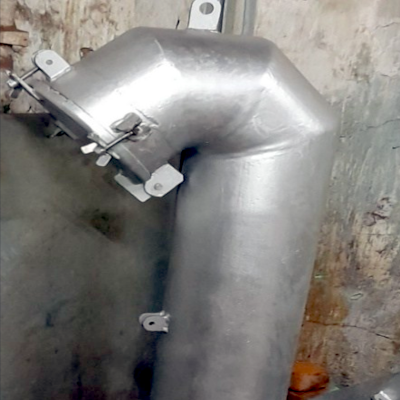
A deck head gooseneck usually refers to a marine Gooseneck air pipe head (or swan neck vent) used on ship decks to ventilate tanks and spaces while stopping water from entering. It features a curved pipe design, an internal floating ball mechanism, and a mesh screen.
Key Parts –
• Curved Pipe: The U-bend or swan-neck shape stops rain and sea spray from falling straight down into the pipe.
• Filter Screen: A mesh screen stops bugs, dirt, and debris from getting inside the tank.
• Flange Connection: Bolts securely to the deck and lower piping structure
COMBINE EX LOUVER WITH ELIMINATOR
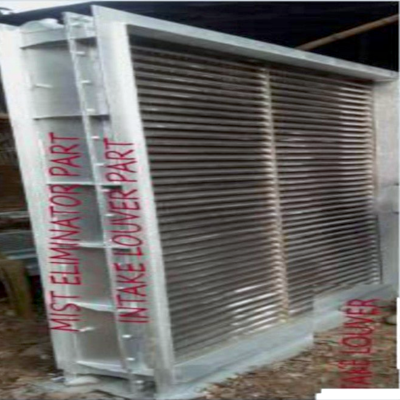
An exhaust louver with a mist eliminator combine unit is a specialized HVAC assembly that expels indoor air while extracting moisture, grease, or water droplets from the outgoing airstream. It features integrated combination louvers paired with chevron-style or blade-type droplet separators.
Key Features –
• Dual Action: Expels air while trapping entrained water droplets or mist before they escape
• MOC Options: Built commonly from Aluminum, galvanized steel, or stainless steel for corrosion resistance.
• Eliminators: Metal chevron blades to force directional changes in airflow, dropping moisture out.
• Low Pressure Drop: Engineered to maintain high free-area airflow without overloading exhaust fans
VOLUME CONTROL DAMPER
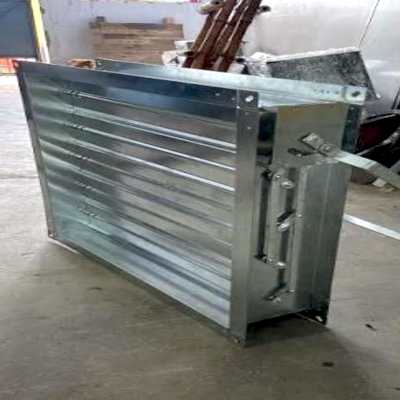
A volume control damper (VCD) is a metal frame with internal adjustable blades used to regulate airflow inside HVAC ductwork. It typically features a square, rectangular, or circular galvanized steel/aluminum casing and an external hand-locking quadrant lever or motor actuator.
Key Visual and Structural Features –
• Frame: A rigid outer shell made of galvanized iron or extruded aluminum designed to mount directly into ventilation ducts.
• Blades: Parallel or opposed internal metal flaps that pivot to open or block air paths.
• Control Handle: An external manual quadrant lever or a motorized actuator used to turn the internal blades and lock them at a specific angle
Common Types –
• Rectangular VCDs: Often use an opposed-blade mechanism to minimize air turbulence.
• Circular/Round VCDs: Built for round spiral ducts with a single pivoting blade and dial regulator.
• Manual vs. Motorized: Adjusted by hand on-site or automated via building management systems.
MANUAL FUSIBLE LINKED FIRE DAMPER
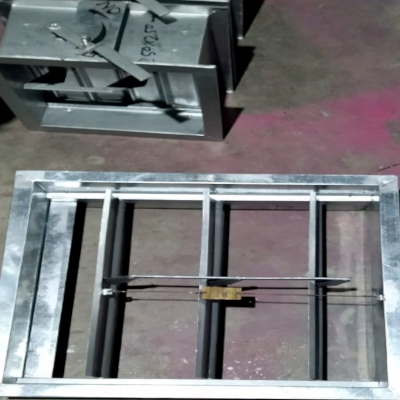
A manual fire damper is a safety device used in HVAC ductwork to stop fire and smoke from moving through walls and floors. It relies on a fusible link that melts at a set high temperature, which releases a spring or gravity latch to shut the steel blades by hand or mechanical reset.
Key Features –
• Fusible Link: Melts at standard ratings (usually around 71°C/160°F or higher) to trigger closure.
• Fire Resistance: Rated to maintain wall or floor fire safety integrity for 90 to 120 minutes or more.
• Construction: Made of strong galvanized or stainless steel frames and blades.
ACTUATOR OPERATED FIRE DAMPER
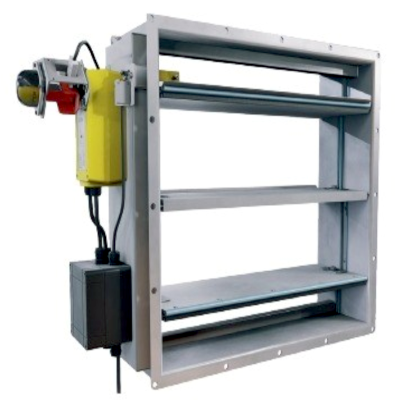
An actuator-operated marine fire damper is a heavy-duty ventilation safety device featuring a steel casing, internal closing blades, and an electric or pneumatic motor. It automatically shuts off airflow upon receiving a remote fire alarm signal or power loss to block fire and smoke.
Key Components –
• Damper Body: Rectangular or round marine-grade steel frame designed for bulkhead or deck mounting.
• Blades: Internal louvers that rotate 90 degrees to seal the duct.
• Actuator: Electric motor (such as Belimo or pneumatic cylinder mounted externally on the side frame.• Thermal Release (ETR/Fusible Link): Safety backup that triggers closure if local duct temperature exceeds limits like 72°C.• Manual Override: Lever or handle allowing manual test closure or mechanical reset.
GAS TIGHT DAMPER
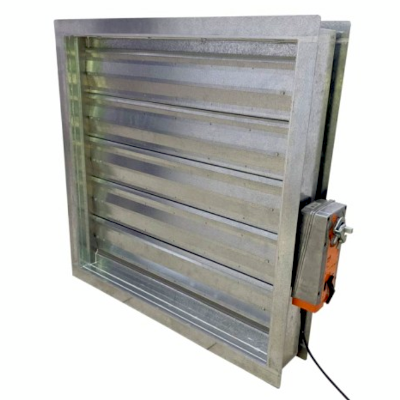
A gas-tight damper is a high-performance isolation device for ventilation systems. It completely blocks air, smoke, or toxic gases from moving through ductwork. It is used in critical places like nuclear plants, laboratories, hospitals, and marine or oil-and-gas facilities.
Key Features –
• Zero or Near-Zero Leakage: Uses specialized silicone, Viton, or quad-ring seals to prevent any gas passage past the closed blades or housing.
• Robust Build: Made from heavy-duty galvanized steel, powder-coated metals, or stainless steel to withstand high differential pressures
• Actuation Options: Available with manual hand-wheels, pneumatic actuators, or electric motors (often with fail-safe spring returns to seal even during a power loss).
Common Applications –
• Containment & Safety: Isolating cleanrooms, chemical labs, or bio-containment areas during a hazard leak.
• Fire & Smoke Protection: Stopping toxic smoke from traveling through ventilation ducts into safe zones.
• Offshore & Industrial: Protecting marine vessels and oil rig living quarters from external gas hazards.
MUSHROOM HOOOD VENTILATOR
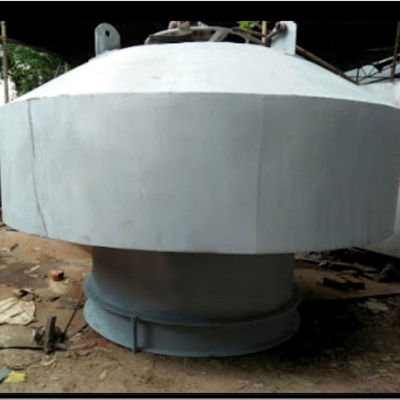
A mushroom hood ventilator on a ship is a dome-shaped deck fitting that provides continuous natural or powered airflow while blocking water ingress. Key features include weather-tight cowls, adjustable internal/external opening spindles, and marine-grade steel or Aluminum construction.
Design and Function –
• Dome Shape: Deflects heavy rain, green water, and sea spray away from the inner ventilation shaft.
• Adjustable Spindle: Features internal or external handwheels to raise, lower, or completely seal the weather-tight cover.
• Materials: Built using galvanized steel, stainless steel, or marine Aluminium to resist intense saltwater corrosion.
• Screens: Fitted with optional bird guards and insect meshes.
CYLINDRICAL HEAT EXCHANGER
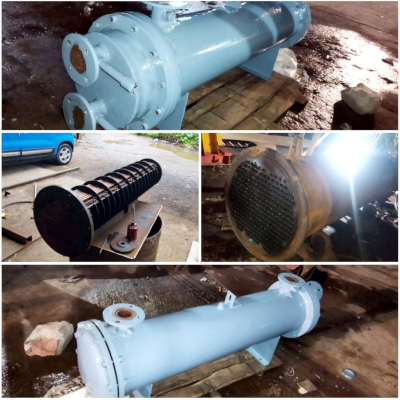
A cylindrical heat exchanger in a refrigeration system is typically a shell-and-tube or plate-and-shell unit. It features a bundle of small metal tubes enclosed inside a sturdy cylindrical outer shell. One fluid (like water or glycol) flows through the inside of the tubes, while the refrigerant flows around them inside the shell to absorb or reject heat.
Key Functions in Refrigeration –
• Evaporator: Liquid refrigerant flows into the shell or tubes, boiling off as it absorbs heat from the medium being chilled.
• Condenser: High-pressure hot refrigerant gas releases heat to cooling water running through the system, turning back into a high-pressure liquid.
• Receiver/Chiller integration: Designed to handle phase changes (condensation and evaporation) efficiently under high system pressures.
Main Benefits –
• High pressure tolerance: Cylindrical metal shells safely contain high-pressure refrigerants like ammonia or HFCs / HFOs.
• Strong structure: Resists thermal stress and mechanical wear over years of heavy use.
• Compact footprint: Plate-and-shell or standard shell-and-tube setups fit well into commercial and industrial chiller skids.
• Easy maintenance: Tube bundles and end covers allow for straightforward cleaning and tube inspection.
DUCTS AND BENDS FOR AIR VENTILATION
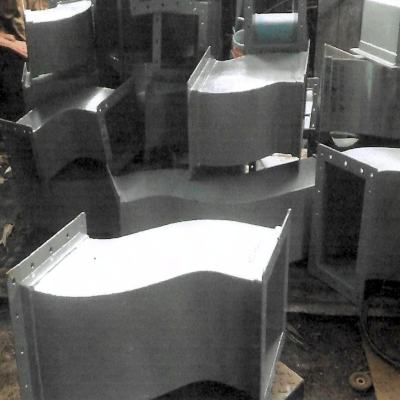
Mild steel (MS) ducts and bends are robust, heavy-duty conduits used in marine and industrial air ventilation, exhaust, and HVAC systems to handle high mechanical stress, high pressure, and rigid fire-safety requirements.
Material and Structural Features –
• High tensile strength and structural durability under severe marine environments.
• Inherently fire-resistant and non-combustible material.
• Protected against corrosion via hot-dip galvanizing, epoxy coatings, or red oxide primer layers.
• Available in custom thicknesses (typically 18G to 12G / heavy gauge) depending on static pressure demands.
Bends and Fittings Specifications –
• Fabricated as 90-degree, 45-degree, or custom-radius turns to smoothly redirect airflow around ship bulkheads and structural frames.• Designed with smooth internal walls to reduce friction losses and pressure drops.
• Frequently flanged or beaded at the ends for secure gasketed bolting or slip-joint connections.
• Can include double-wall insulated variants or acoustic linings to minimize noise transfer through cabins
Our Contacts

D. Mazumder & Co.
An MSME Registered and ISO 9001:2015 Certified Organisation
345 / 527,
Kabi Guru Rabindra Path (North),
Kanchrapara, 24 Pgs. (North),
Kolkata - 743 145
West Bengal, India
info@dmazumder.com
(+91) 82406 14530 / 96747 39884